
Start with the type and cause of damage
A useful repair plan begins with more than the visible mark. A drywall contractor may need to consider whether the area is dry and stable, whether plumbing or electrical work is complete, how the drywall is supported, and what texture and paint surround the repair.
Quick answer: Small isolated damage can often be patched. Soft drywall, recurring cracks, water damage, multiple openings, or a damaged ceiling may call for removal and replacement of a larger section.
Common types of drywall damage
- Nail, anchor, impact, and furniture holes
- Plumbing, electrical, repipe, or inspection access openings
- Cracks, loose tape, dents, and failed older patches
- Ceiling openings, stains, sagging, or localized damage
- Drywall affected by a leak after the source is corrected
- Texture damage or finish differences that make a patch visible
The drywall hole repair guide explains how small holes differ from larger openings that need backing, replacement material, and broader finish work.
Cracks may require different planning from holes, especially when they recur or appear at joints, corners, ceilings, doors, or windows. Review the drywall crack repair guide before treating an unexplained or recurring crack as a cosmetic patch.
Wall and ceiling repairs are not identical
Wall repairs are usually easier to reach and evaluate from several angles. Ceiling work adds overhead access, gravity, lighting across the surface, and ceiling-specific texture or paint considerations. If the damage is overhead, review the guide to ceiling drywall repair in Orange County.
Drywall repair after plumbing work
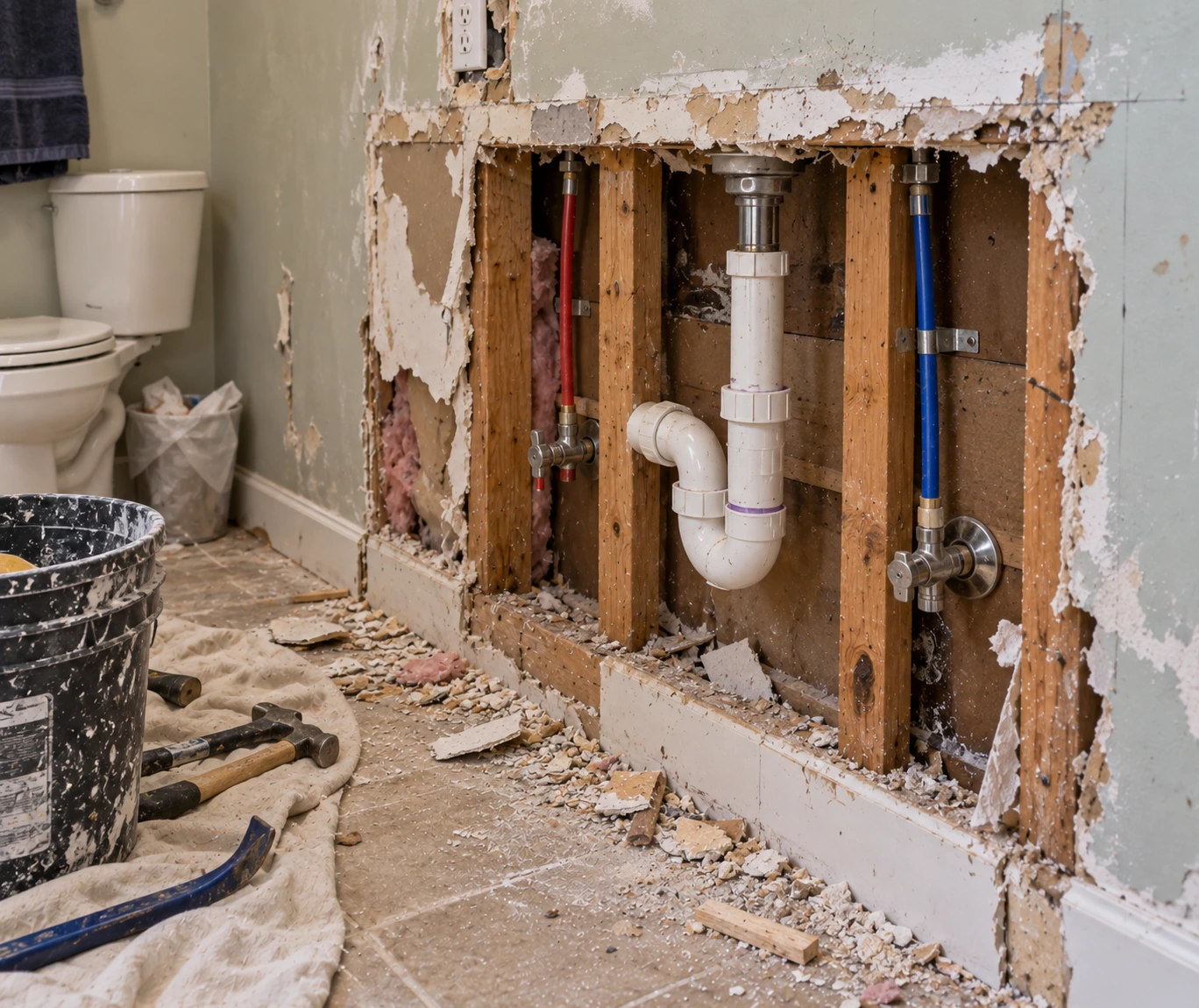
Plumbing repairs and repipes can leave one or several access openings in walls and ceilings. Once the trade work is complete and the openings are ready to close, the drywall scope may include backing, replacement panels, seam finishing, texture, primer, and paint. See drywall repair after plumbing work for the full sequence and the information that helps define the project.
Water-damaged drywall
A stain alone does not show whether drywall is ready for cosmetic repair. The moisture source should be corrected first, and soft, sagging, repeatedly wet, or otherwise deteriorated material may need to be removed. The water-damaged drywall guide explains what to consider before closing or refinishing the area.
Texture and paint affect the final result
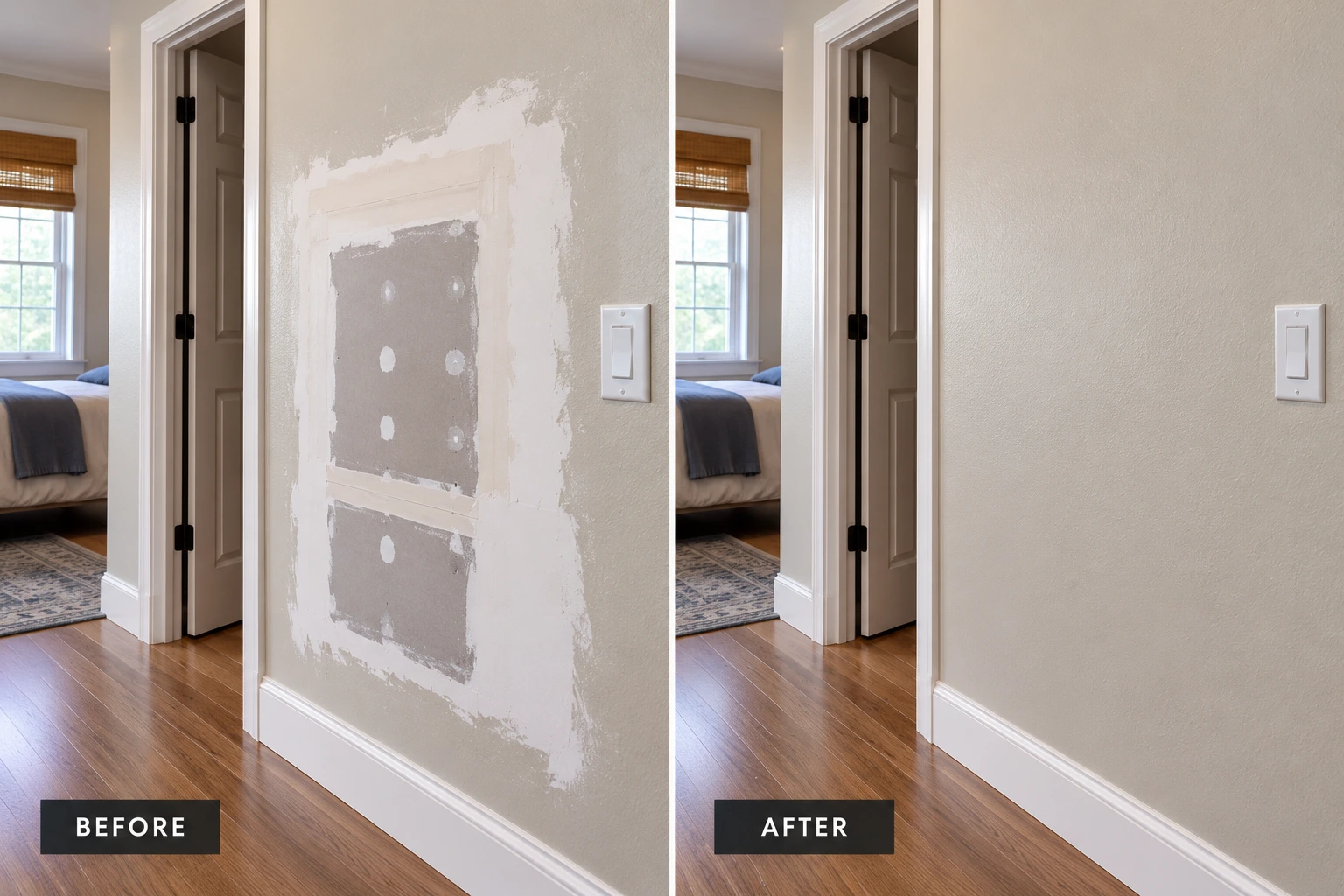
Closing an opening is only part of a finished sheetrock repair. Orange peel, knockdown, smooth finishes, paint age, sheen, lighting, and the size of the blend area all affect how the repair looks. Review drywall texture matching before comparing scopes that include different finish levels.
Repair or replace a larger section?
Replacement does not necessarily mean removing an entire wall or ceiling. It may mean cutting back to sound material so the new section has stable edges and support. Damage size, surrounding condition, access, moisture, and finish expectations all matter. Use the repair versus replacement guide to compare those factors.
What affects drywall repair cost?
Cost depends on more than the diameter of a hole. The number and location of damaged areas, wall or ceiling height, accessibility, removal needs, backing, texture, protection, cleanup, primer, and paint can all change the scope. The Orange County drywall repair cost guide organizes these variables without using one-price-fits-all claims.
Choosing the next step
Use the guides above to identify the problem, understand the likely repair scope, and prepare useful questions. If an onsite evaluation seems appropriate, look for a drywall contractor who can explain what will be removed, how the new material will be supported, how far finishing will extend, and whether texture, primer, paint, and cleanup are included.
Before comparing totals, use the drywall repair estimate guide to check finish responsibilities, exclusions, and assumptions.
You can use all site information without submitting a project. Homeowners who want optional contractor help can provide the Orange County location, photos, dimensions, cause of damage, and known finish details.